If you run a small business, you’ve probably asked yourself: Should I use cash or accrual accounting? This choice can feel overwhelming because it affects how you track money, report income, and even how much tax you pay. Many entrepreneurs start with cash basis accounting because it’s simple, but as their businesses grow, accrual accounting often becomes the smarter choice.
In this article, we’ll break down the cash vs accrual accounting debate in simple terms. You’ll learn what each method means, how they work, their advantages and disadvantages, and how to decide which one is right for your business. By the end, you’ll have a clear understanding of the difference between cash and accrual accounting, and feel confident in choosing the right system.
What Is Cash Basis Accounting?
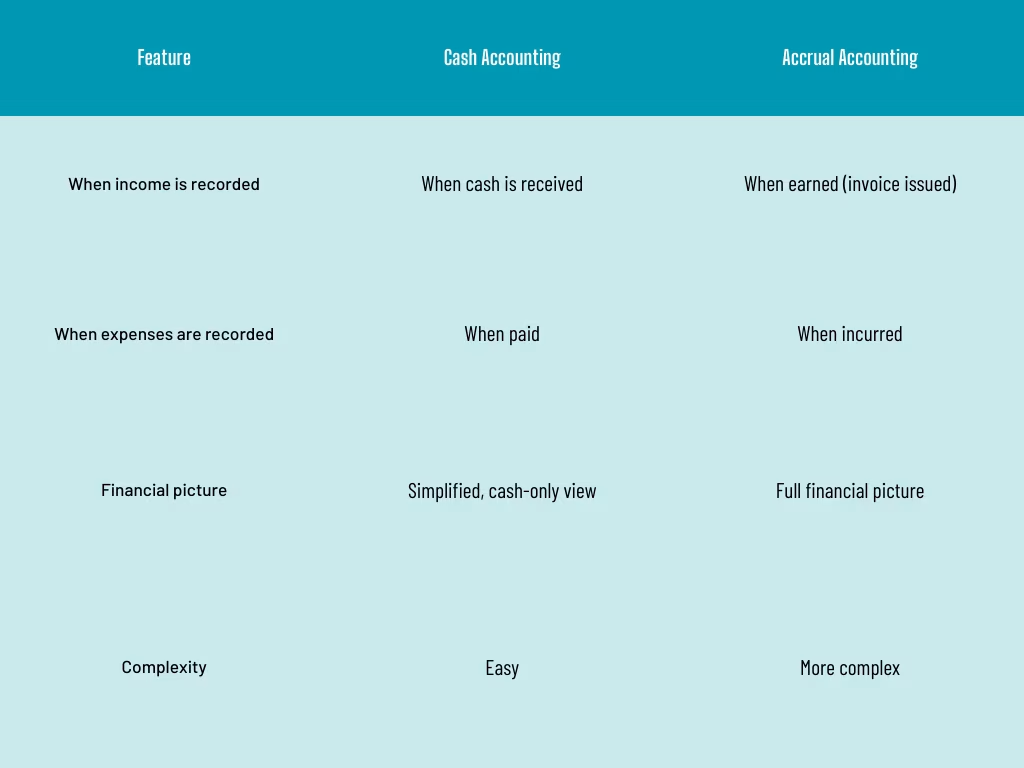
Cash basis accounting records income when cash is received and expenses when they’re paid. It’s straightforward: money in, money out.
For example:
- If you send an invoice in January but get paid in February, you record the income in February.
- If you buy supplies in March but pay for them in April, you record the expense in April.
Pros of Cash Basis Accounting
- Simplicity: Easy to understand and maintain.
- Cash visibility: You always know exactly how much money is in your bank account.
- Tax advantage: Income is only reported when received, which may delay taxes.
Cons of Cash Basis Accounting
- Incomplete financial picture: Doesn’t account for money owed (receivables) or debts (payables).
- Not GAAP compliant: Larger companies and those seeking outside investment usually can’t use it.
- May mislead growth potential: Profitability can appear distorted.
What Is Accrual Accounting?
Accrual accounting records income when it’s earned (even if not paid yet) and expenses when they’re incurred (even if not yet paid).
For example:
- If you invoice a client in January, you record it as income in January, even if they pay in March.
- If you receive supplies in April but pay in May, you record the expense in April.
Pros of Accrual Accounting
- Complete financial picture: Tracks receivables, payables, and long-term obligations.
- Accurate profitability: Shows revenue and expenses in the period they happen.
- Required for compliance: Public companies and many growing businesses must use accrual accounting.
Cons of Accrual Accounting
- More complex: Requires more bookkeeping knowledge.
- Cash flow blind spots: You can show profit on paper but still have no cash in hand.
- Can be costly: May require accounting software or a professional accountant.
Cash vs Accrual Accounting: Key Differences
Here’s a quick breakdown of the difference between cash and accrual accounting:
Cash vs Accrual Accounting Examples
Example 1: A Freelance Designer (Cash Basis)
Maria, a freelance designer, invoices a client $2,000 in December but gets paid in January. With cash accounting, she records the $2,000 as January income.
Example 2: A Growing Agency (Accrual Basis)
Her agency grows and hires staff. By December, it invoices $10,000 and expects payment in January. With accrual accounting, it records the $10,000 in December, matching it against expenses that month to show true profitability.
Which Method Is Best for Small Businesses?
The right choice depends on your business size, goals, and industry:
- Cash accounting is best if:
- You’re a sole proprietor, freelancer, or very small business.
- You want simplicity and a clear view of cash flow.
- You don’t need to meet GAAP compliance.
- You’re a sole proprietor, freelancer, or very small business.
- Accrual accounting is best if:
- You plan to scale, seek investors, or get loans.
- You sell on credit or manage large inventories.
- You want a long-term, accurate view of profitability.
- You plan to scale, seek investors, or get loans.
How to Switch From Cash to Accrual
If you’ve been using cash basis but want to switch to accrual, here are the steps:
- Check IRS rules – For U.S. businesses, the IRS requires some businesses (like those with inventory) to use accrual.
- Adjust opening balances – Record accounts receivable, accounts payable, and inventory.
- Update your accounting software – Many platforms let you switch reporting methods.
- Consult an accountant – Switching impacts taxes, so get professional help.
Cash Basis vs Accrual Basis: Tax Implications
- Cash basis may let you defer taxes by delaying invoices or accelerating expenses.
- Accrual basis aligns income and expenses, but you might owe taxes on money you haven’t received yet.
Pro Tip: Some businesses use a hybrid method, cash basis for taxes but accrual for internal reporting.
Cash vs Accrual Accounting for Small Businesses
Many small businesses start with cash accounting but switch to accrual as they grow. For example:
- Freelancers: Cash basis keeps things simple.
- Retailers with inventory: Accrual is usually required.
- Service-based businesses: Often start with cash, then switch when expanding.
FAQs on Cash vs Accrual Accounting
1. What is the main difference between cash and accrual accounting?
Cash accounting records when money changes hands; accrual records when transactions occur.
2. Which method is easier?
Cash accounting is easier and more beginner-friendly.
3. Can I switch from cash to accrual?
Yes, but it requires adjustments and sometimes IRS approval.
4. What do investors prefer?
Accrual, because it shows a clearer financial picture.
Conclusion
Choosing between cash vs accrual accounting is more than just a bookkeeping decision, it shapes how you see your business’s health and make financial decisions. Cash accounting is simple and works well for very small businesses. Accrual accounting gives a complete, accurate view of your finances and is better for growth. The best method depends on your goals. If you’re just starting out, cash might do the job. But if you’re planning to grow, accrual is worth the extra effort.