Have you ever written a paper check and thought, there has to be a faster way? In today’s digital world, most of us pay bills, send money, or receive payments online, yet checks still play a big role in business and personal finance. Enter the eCheck, short for electronic check.
An eCheck combines the familiarity of traditional checks with the convenience of modern payment technology. If you’ve ever asked, what is an eCheck?, how does eCheck work?, or how long does eCheck take to process? This guide will give you a clear, step-by-step overview.
What is an eCheck?
An eCheck (electronic check) is a digital version of the traditional paper check. Instead of writing on paper and handing it over, you authorize an online payment that moves money directly from your checking account to the recipient’s account.
eChecks work through the Automated Clearing House (ACH) network, the same system used for direct deposits and recurring bill payments.
In short:
- A paper check requires physical handling, mailing, and manual deposit.
- An eCheck skips the paper and moves money electronically, faster, safer, and more convenient.
Quick Definition: An eCheck is an electronic funds transfer from your checking account using the information on your paper check (account number, routing number, authorization).
How Does an eCheck Work? Step by Step
If you’ve ever wondered, how does eCheck work? The process is simpler than it seems. Here’s the breakdown:
1. Authorization
The payer (you) gives permission for funds to be withdrawn. This can be done:
- Online via a payment form
- Over the phone
- Through a signed contract
2. Payment Information
The payer provides bank account details:
- Account number
- Routing number
- Payment amount
- Date of transaction
3. Submission to the ACH Network
The payment processor or bank submits the transaction to the ACH network, which handles electronic funds transfers.
4. Clearing & Settlement
The payer’s bank verifies sufficient funds, deducts the payment, and sends it through ACH to the recipient’s bank.
5. Deposit & Confirmation
The recipient’s bank deposits the money into their account. Both parties may receive email or digital confirmations.
Timeline: Most eChecks take 3–5 business days to fully process, though some providers offer faster deposits.
Read More: What Is Accrual Accounting? Definition, Benefits and Drawbacks
Example: Paying Rent with an eCheck
Imagine Sarah pays her $1,200 rent online:
- She logs into her landlord’s portal.
- She enters her bank account and routing number.
- She authorizes the payment.
- Within 3 business days, her landlord sees the funds deposited.
No paper checks, no stamps, no waiting in line at the bank.
What Does an eCheck Look Like?
Unlike a paper check, an eCheck doesn’t have a physical form. Instead, it looks like an electronic transaction on your bank statement.
However, the information is the same as a traditional check:
- Your name and bank information
- Routing and account numbers
- The amount and date of payment
Think of it as a digital twin of a paper check.\
Benefits of Using eChecks
So, why switch from paper checks or even credit cards to eChecks? Here are the main advantages:
1. Lower Processing Fees
Credit card fees often range from 2.5% to 4%. eCheck fees are usually a flat fee ($0.25–$1.50 per transaction), making them ideal for high-value payments.
2. Security
eChecks are processed through encrypted ACH systems with fraud detection, reducing the risk of check fraud or theft.
3. Convenience
No need to write checks, buy stamps, or physically mail payments. Everything is handled online.
4. Faster than Paper Checks
Paper checks can take a week or more (mailing + clearing). eChecks usually clear within 3–5 business days.
5. Recurring Payments
Perfect for subscriptions, tuition, or loan repayments where you authorize automatic withdrawals.
Drawbacks of eChecks
Of course, eChecks aren’t perfect. Here are some considerations:
- Processing Time: Slower than credit cards (instant) or wire transfers (same day).
- Bank Account Required: Both payer and payee need bank accounts.
- Not Universally Accepted: Some small businesses or individuals may not accept eChecks.
- NSF Risks: If the payer doesn’t have enough funds, the eCheck “bounces,” just like a paper check.
eCheck vs Other Payment Methods
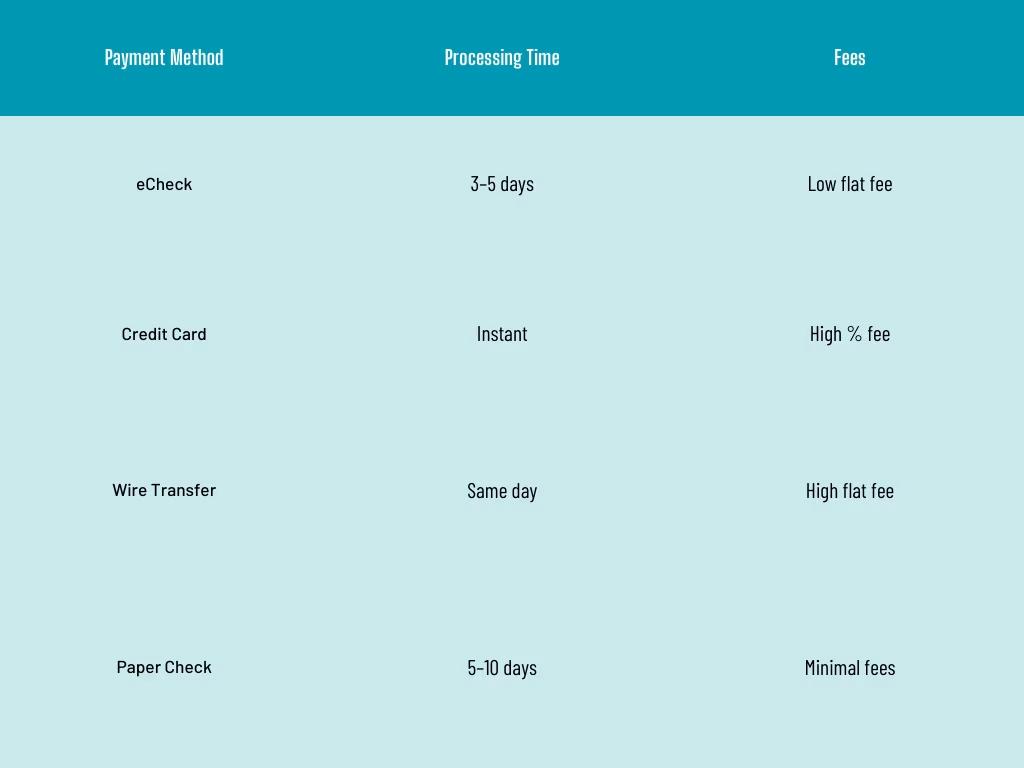
Key Insight: eChecks balance affordability and security, making them a strong option for businesses handling recurring or large-value payments.
Common Uses of eChecks
eChecks are widely used in both personal and business finance.
Personal Uses:
- Paying rent or mortgage
- Utilities and monthly bills
- Loan repayments
- Insurance premiums
Business Uses:
- Payroll deposits
- Vendor payments
- Subscription services
- Membership dues
How Long Does an eCheck Take to Process?
The big question: how long does eCheck take to process?
- Standard processing: 3–5 business days
- Faster processing (with some providers): 1–2 business days
- International transactions: May take longer, depending on banking systems
Factors affecting timing:
- Bank holidays/weekends
- Amount of the transaction
- History of the payer’s account
Security of eChecks
Security is often the biggest concern. eChecks are considered safe because:
- They use bank-level encryption
- ACH transactions are monitored for fraud
- Payers must authorize transactions
- Banks can reverse fraudulent charges
Compared to paper checks which can be lost, stolen, or forged, eChecks are more secure.
eCheck Payment Processing for Businesses
Businesses often prefer eChecks over cards for large invoices. Here’s why:
- Lower transaction fees save thousands annually.
- Automated processing reduces paperwork.
- Recurring billing creates steady cash flow.
For example, a law firm billing $20,000/month in retainers would pay:
- $500+ in card fees
- Just $25–$50 in eCheck fees
How to Accept eCheck Payments as a Business
If you run a business and want to accept eChecks:
- Choose a Payment Processor
Examples: PayPal, Stripe, or specialized ACH providers. - Set Up a Merchant Account
This allows ACH payments to be deposited. - Collect Customer Info
You’ll need account and routing numbers. - Integrate Payment Gateway
Add eCheck options to your website, invoices, or apps. - Stay Compliant
Ensure you follow NACHA rules (ACH governing body).
eChecks in the Digital Payment Landscape
While eChecks may sound “old school” compared to Apple Pay or crypto, they still fill an important gap.
- For businesses: Affordable, secure, and scalable.
- For consumers: A bridge between paper checks and digital banking.
With the rise of AI in accounting and finance software (like Otto AI), eChecks are becoming even easier to track, reconcile, and automate.
FAQs About eChecks
1. What is an eCheck in simple terms?
It’s an online version of a paper check that transfers money through the ACH system.
2. Are eChecks safe?
Yes, ACH processing uses encryption and fraud prevention tools.
3. How long does an eCheck take?
Usually 3–5 business days.
4. Can eChecks bounce?
Yes, if there aren’t enough funds in the payer’s account.
5. Do all banks accept eChecks?
Most U.S. banks support ACH payments, but availability may vary internationally.
Conclusion
The world is moving away from paper, but checks still play an essential role in financial transactions. That’s where eChecks come in, bridging the gap between traditional banking and digital convenience.