Accounting may seem intimidating at first, filled with terms like “debits” and “credits” that often confuse beginners. If you’ve ever wondered “Do you debit or credit expenses?” or “What’s the difference between debit and credit in accounting?”, you’re not alone. These concepts form the foundation of bookkeeping, and once you understand them, the rest of accounting becomes much easier.
In this guide, we’ll walk through everything you need to know about debits vs credits in accounting, including definitions, examples, rules, and how they apply in real-world scenarios. By the end, you’ll know exactly how to use debits and credits in your own books, or at least understand what your accountant is talking about.
What Are Debits and Credits in Accounting?
At its core, accounting is a system of tracking money as it flows in and out of a business. Every transaction has two sides: a debit and a credit.
- Debit (Dr.): An entry on the left side of an account. It often represents an increase in assets or expenses and a decrease in liabilities or equity.
- Credit (Cr.): An entry on the right side of an account. It often represents an increase in liabilities, equity, or revenue and a decrease in assets or expenses.
Think of it as a balancing act: for every debit, there must be an equal credit. This is the essence of double-entry accounting.
Example:
- If you buy office supplies for $200 with cash:
- Debit: Office Supplies (+$200, asset increases)
- Credit: Cash (-$200, asset decreases)
- Debit: Office Supplies (+$200, asset increases)
The books remain balanced because the debit equals the credit.
Why Are Debits and Credits Important?
Debits and credits matter because they:
- Keep financial records accurate – Ensuring that every dollar spent or earned is accounted for.
- Support financial reporting – Income statements, balance sheets, and cash flow statements all rely on accurate use of debits and credits.
- Prevent errors – Double-entry bookkeeping reduces the risk of mistakes since every entry must balance.
- Provide clarity for decision-making – Business owners and investors can see a clear picture of financial health.
In short, without debits and credits, accounting would be chaos.
The Golden Rules of Debit and Credit
To understand how debits and credits work, accountants follow certain rules based on the type of account.
Rule 1: Assets
- Debit increases assets (cash, inventory, equipment, etc.)
- Credit decreases assets
Example: Buying a laptop for your business.
- Debit: Equipment (asset increases)
- Credit: Cash (asset decreases)
Rule 2: Liabilities
- Debit decreases liabilities
- Credit increases liabilities
Example: Taking out a loan for $5,000.
- Debit: Cash (asset increases)
- Credit: Loan Payable (liability increases)
Rule 3: Equity
- Debit decreases equity
- Credit increases equity
Example: Owner invests $1,000 in the business.
- Debit: Cash (asset increases)
- Credit: Owner’s Equity (equity increases)
Rule 4: Expenses
- Debit increases expenses
- Credit decreases expenses
Example: Paying $500 in rent.
- Debit: Rent Expense (+$500)
- Credit: Cash (-$500)
(Answering the common question: Do you debit or credit expenses? → Expenses are debits.)
Rule 5: Revenue (Income)
- Debit decreases revenue
- Credit increases revenue
Example: Selling goods for $2,000.
- Debit: Accounts Receivable (+$2,000 asset)
- Credit: Sales Revenue (+$2,000 income)
Read More: What Is Double Entry Bookkeeping? A Simple Guide for Small Businesses
Debit vs Credit Accounting: A Comparison Table
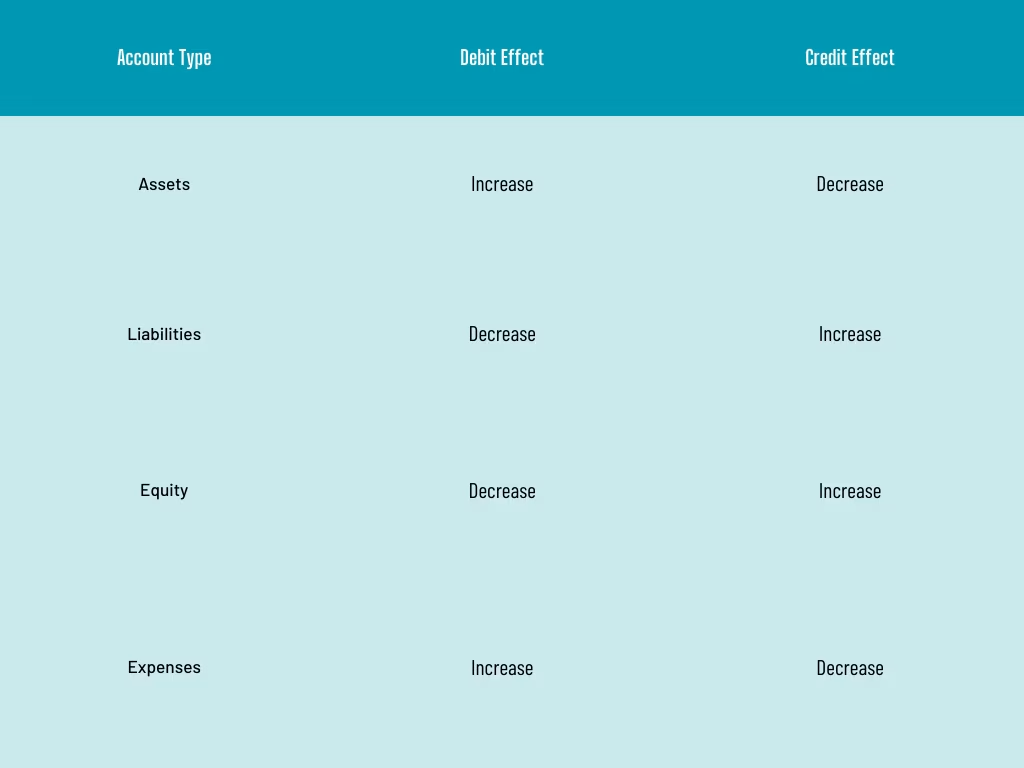
This table gives you a quick way to understand how debits and credits affect different accounts.
Common Questions About Debits and Credits
1. Do you debit or credit expenses?
Expenses are always debited because they reduce equity.
2. Is equipment a debit or credit?
Equipment is an asset, so increases are debited and decreases are credited.
3. What’s the difference between debit and credit?
- Debit = left side, increases assets/expenses.
- Credit = right side, increases liabilities/revenue/equity.
4. Is revenue a debit or credit?
Revenue is always a credit because it increases equity.
Debit and Credit Examples in Real Life
Let’s break down a few everyday transactions for a small business.
- Buying office supplies for $100 cash
- Debit: Office Supplies (Asset +$100)
- Credit: Cash (Asset -$100)
- Paying $1,000 for monthly rent
- Debit: Rent Expense (Expense +$1,000)
- Credit: Cash (Asset -$1,000)
- Taking a $5,000 bank loan
- Debit: Cash (Asset +$5,000)
- Credit: Loan Payable (Liability +$5,000)
- Selling services worth $2,500 on credit
- Debit: Accounts Receivable (Asset +$2,500)
- Credit: Service Revenue (Revenue +$2,500)
Each example follows the debit-credit rules perfectly.
Why Debits and Credits Confuse Beginners
Many beginners assume:
- Debit = good, Credit = bad (like a debit card vs a credit card).
But in accounting, both are neutral. They’re simply two sides of a balanced entry.
Tip to remember:
- DEALER rule → Dividends, Expenses, Assets = Debit increases; Liabilities, Equity, Revenue = Credit increases.
The Role of Debits and Credits in Double-Entry Bookkeeping
Double-entry bookkeeping means every financial transaction affects at least two accounts, one debit and one credit. This system:
- Creates a self-checking balance.
- Reduces fraud and error.
- Ensures that the accounting equation (Assets = Liabilities + Equity) always holds true.
Debit vs Credit Accounting Example: Full Journal Entry
Imagine you run a bakery and purchase flour worth $500 on credit.
- Debit: Inventory (Asset +$500)
- Credit: Accounts Payable (Liability +$500)
Later, when you pay the supplier:
- Debit: Accounts Payable (-$500 liability)
- Credit: Cash (-$500 asset)
This shows the full cycle of a debit-credit relationship.
How to Learn Debits and Credits Easily
If you’re still struggling, here are some tips:
- Think of T-Accounts: Draw a “T” with debits on the left, credits on the right.
- Practice with real examples: Record your personal expenses as journal entries.
- Use accounting software: Tools like Otto AI Accounting Software, QuickBooks, or Xero automate debit-credit entries for you.
- Memorize the DEALER rule: Assets and expenses increase with debits; liabilities, equity, and revenue increase with credits.
The Role of Accounting Software in Managing Debits and Credits
Manually tracking debits and credits can get complicated fast. That’s why many small businesses use accounting software like Otto AI to:
- Automatically categorize debits and credits.
- Generate reports (balance sheet, income statement).
- Prevent data-entry errors.
- Save time on bookkeeping.
This way, you don’t have to memorize every debit and credit rule, the software does it for you.
Conclusion
Understanding debits vs credits in accounting is essential for keeping accurate books and making informed financial decisions. While it may seem confusing at first, once you grasp the basic rules, assets and expenses go up with debits, liabilities and revenue go up with credits, you’ll find accounting much easier.
Double-entry bookkeeping provides a solid foundation for any business, ensuring accurate financial records. Additionally, understanding 1099 tax form basics can be crucial when managing finances for freelancers and small business owners.